

Electronic call monitoring for home care has become one of the most important tools available to UK domiciliary care agencies. As CQC expectations around evidence of care delivery have grown, and as local authority commissioners demand more rigorous reporting, the days of paper timesheets and manual phone check-ins are firmly behind us.
This guide covers everything you need to know, from how electronic call monitoring works and why it matters, to what to look for when choosing a system for your agency.
What is electronic call monitoring for home care?
Electronic call monitoring (ECM) is a digital system that records when care workers arrive at and leave a client’s home during a visit. Rather than relying on paper timesheets completed at the end of a shift, carers use a mobile app or landline to clock in and out in real time, with the data submitted instantly to the office management system.
The result is an accurate, time-stamped record of every visit completed, visible to office staff as it happens. For care managers, this means real-time visibility of their entire workforce across all client visits, without waiting for paperwork to come in.

The benefits of Electronic Call Monitoring (ECM) for home care businesses
What is Electronic Call Monitoring? (ECM)
Electronic Call Monitoring or ECM refers to a system that lets home care businesses record the times, locations, and activities of remote employees electronically – providing assurance that care visits were attended, evidence of compliance, and helping keep employees and clients safe.
Traditionally, Electronic Call Monitoring systems were operated via telephony systems using a landline to verify location, but now it’s becoming more common for employees to use a dedicated clocking-in app that feeds information directly to a care management system.
Why use an Electronic Call Monitoring System?
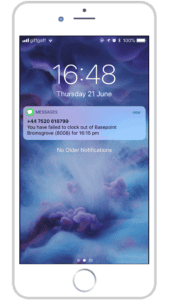
Electronic Call Monitoring is an essential tool for many businesses that manage remote employees and provide services across multiple sites over different geographical areas. This can be especially helpful for a business that delivers home care or cleaning services.
Using a telephony system or scheduling app lets employees clock in and out of a location seamlessly, creating a definitive record of a completed visit. This provides reassurance that employees aren’t missing any appointments and can be used in conjunction with timesheets and payroll software to ensure that wages are paid accurately.
Electronic Call Monitoring systems also allow businesses to keep track of lone workers while on the road, which gives added reassurance that they are safe, especially when working late, unsociable hours.
In addition, ECM can also help businesses improve the continuity and quality of their service. For e.g, a missed visit would be flagged to the system operator – which would allow them to react quickly and ensure that something can be done to remedy the issue. Not only does this help with staff monitoring, but it also helps reduce the time spent on administrative tasks.
Benefits of Implementing Electronic Call Monitoring
Electronic call monitoring can be used by home care providers that offer care across multiple sites or in different geographical regions. The benefits of ECM include:
- The definitive record of completed visits
- Replaces paper timesheets and printed schedules
- Proves if a carer was on time, late, or didn’t turn up
- Enables accurate pay, invoicing, and mileage claims
- Records where a carer clocked-in geographically
- Provides real-time alerts to care co-ordinators if things go wrong
- Tasks and directions for carers
 Why electronic call monitoring matters for UK home care agencies
CQC compliance
The Care Quality Commission expects home care providers to demonstrate that care was delivered as planned, at the right time, by the right person. Electronic call monitoring provides the evidence base to support this, with GPS-verified attendance records, time-stamped visit logs, and task completion data that can be retrieved instantly during an inspection.
Without ECM, agencies relying on paper records or manual timesheets face a significantly harder task when evidencing compliance, particularly across large or multi-branch services where oversight is more complex.
Lone worker safety
Home care workers spend their days working alone in clients’ homes, often with vulnerable individuals, sometimes in isolated settings. Electronic call monitoring provides a safety net. If a carer does not clock in within the expected window, the office is alerted immediately and can follow up before the situation escalates.
GPS tracking also means office staff can see each carer’s last known location at any time, providing reassurance and enabling a fast response if something appears wrong.
Payroll accuracy
Manual timesheets are prone to error. Carers may round visit times up or down, forget to submit paperwork, or make honest mistakes under time pressure. ECM calculates visit times directly from verified clock-in and clock-out data, removing the scope for error and significantly reducing the administrative burden on office teams.
For agencies with large workforces, the time savings in payroll processing alone can justify the investment in an ECM system.
Commissioner reporting
Local authority commissioners increasingly expect home care providers to demonstrate punctuality, continuity, and service delivery data at a granular level. Electronic call monitoring produces the reports commissioners need automatically, without hours of manual data collation.
How electronic call monitoring works in practice
Most modern ECM systems for home care work in one of two ways, or a combination of both.
Mobile app clock-in. Carers use a smartphone app to clock in and out of visits. GPS confirms their location at the point of clock-in and clock-out, verifying they were at the client’s address. The data is submitted to the office system in real time.
Landline clock-in. Carers dial a dedicated number from the client’s landline at the start and end of the visit. The system records the call, verifies the number against the client’s registered address, and logs the visit time. This option is useful for clients without a reliable broadband connection, or for carers without smartphones.
Some systems also support NFC tags, QR codes, and other verification methods, offering flexibility for different client settings and carer preferences.
What to look for when choosing an ECM system for your agency
Not all electronic call monitoring systems are equally suited to domiciliary care. Here are the key questions to ask when evaluating your options.
Does it work offline? Poor mobile signal is a real issue in some areas. Look for a system where the app can record visit data offline and sync when signal is restored, so no visit goes unrecorded.
Does it integrate with your other systems? ECM works best when it connects directly with your rostering, payroll, invoicing, and compliance tools. A standalone ECM product that does not share data with your care management system creates duplication and gaps.
What alerts does it generate? Real-time alerts for missed or late visits are essential. The best systems allow managers to configure alert thresholds and receive notifications via the dashboard, email, or text.
How does it handle payroll? Look for automatic payroll calculations based on verified visit times, including National Living Wage compliance checks. This removes the need for manual calculations and reduces the risk of errors.
What does implementation look like? A system that takes months to embed properly will cost more than the subscription. Ask prospective providers how they handle data migration, staff training, and go-live support, and speak to existing customers about their experience.
Electronic call monitoring for home care: how we can help
IQ:timecard is Unique IQ’s electronic call monitoring system, built specifically for UK home care and domiciliary care agencies. It provides GPS-verified attendance, real-time alerts for missed and late visits, lone worker safety tracking, automatic payroll calculations, mileage tracking, and business performance reports, all within a single system that integrates with the full Unique IQ platform.
Unique IQ has been supporting UK home care agencies for nearly 20 years. When you contact us, you speak to a real person who understands your world.
Book a demo to see IQ:timecard in action.
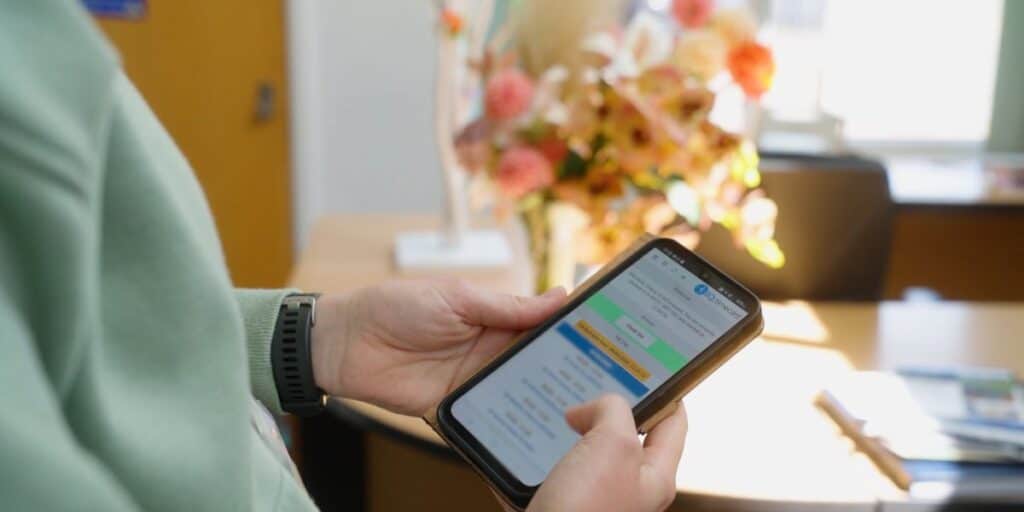
Frequently asked questions
What does ECM stand for in home care? ECM stands for electronic call monitoring. It is a system that records when care workers arrive and leave client visits in real time, replacing paper timesheets with verified digital records.
Is electronic call monitoring a legal requirement for home care? It is not a legal requirement, but CQC expects home care providers to evidence that care was delivered as planned. ECM is the most reliable way to produce that evidence consistently.
Can electronic call monitoring work without a smartphone? Yes. Many ECM systems, including IQ:timecard, offer a landline clock-in option for carers without smartphones or in areas with poor mobile signal.
How does electronic call monitoring help with payroll? ECM calculates visit times automatically from verified clock-in and clock-out data, removing the need for manual timesheet processing and reducing payroll errors.
What happens if a carer forgets to clock in? Most systems generate an automatic alert to the office if a carer has not clocked in within the expected window, allowing managers to follow up quickly.
Does electronic call monitoring track carers between visits? Most systems only track location at the point of clock-in and clock-out, not continuously between visits. This protects carer privacy while still providing the attendance verification agencies need.
What to know more about our electronic call monitoring features?