
In short: The 10 must-have home care management software features every UK home care agency should insist on are CQC-ready compliance tools, electronic call monitoring (ECM), AI-assisted care planning, a mobile-first carer app, real-time rostering and scheduling, integrated eMAR, reporting and data dashboards, secure two-way communication, payroll and invoicing integration, and implementation support with ongoing customer service.
Home care management software is a digital platform that brings together the core functions of running a domiciliary care agency, including scheduling, electronic care planning, visit notes, medication records, carer apps, client and family portals, invoicing and CQC compliance evidence. The ten features below are the baseline any modern platform should offer, whether you are moving off paper for the first time or replacing a system that no longer fits.
The 10 features at a glance:
- CQC-ready compliance tools: audit-ready records produced automatically, with documentation gaps flagged before they become inspection risks.
- Electronic call monitoring (ECM): GPS-verified clock in and out, supporting payroll accuracy, lone worker safety and evidence for commissioners.
- AI-assisted care planning: structured prompts and suggested wording that cut drafting time and improve consistency.
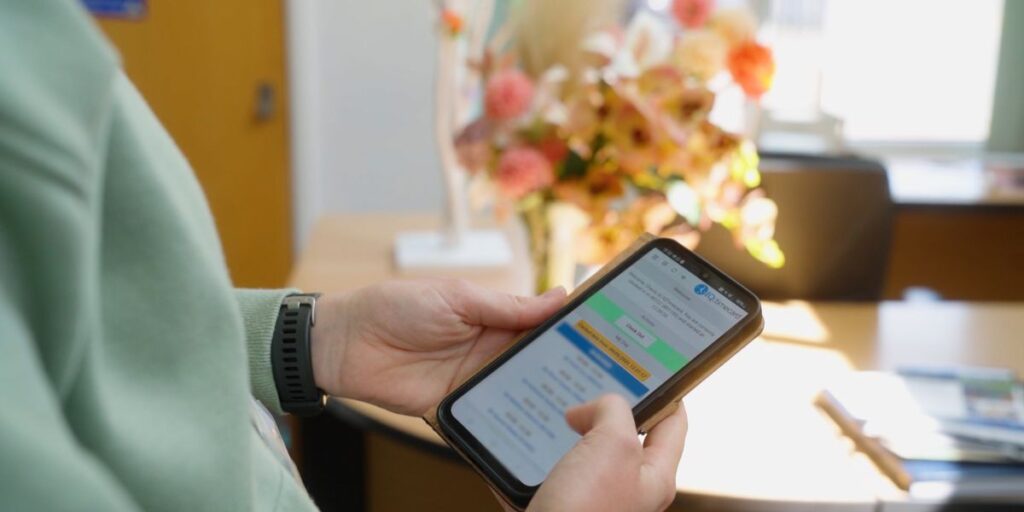
- Mobile-first carer app: care plans, MAR charts, tasks and notes available on a carer’s phone, working reliably in the field.
- Real-time rostering and scheduling: best-match allocation by skills, client preference, travel time and contracted hours, pushed instantly to carers.
- Integrated eMAR: real-time alerts for missed or refused medication, linked directly to care plans and visit records.
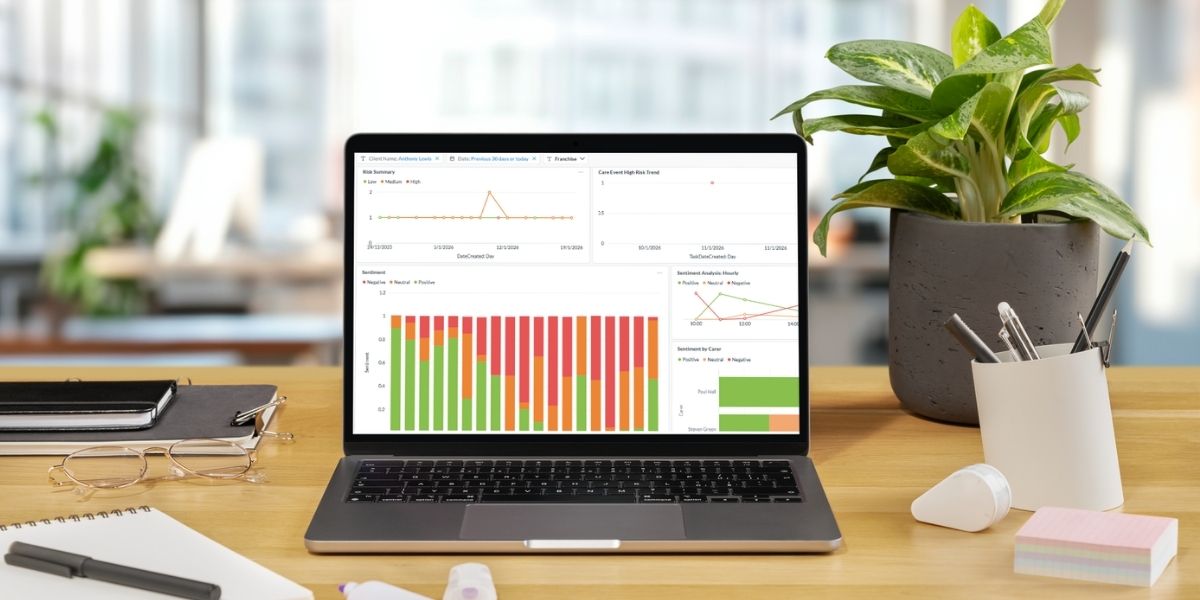
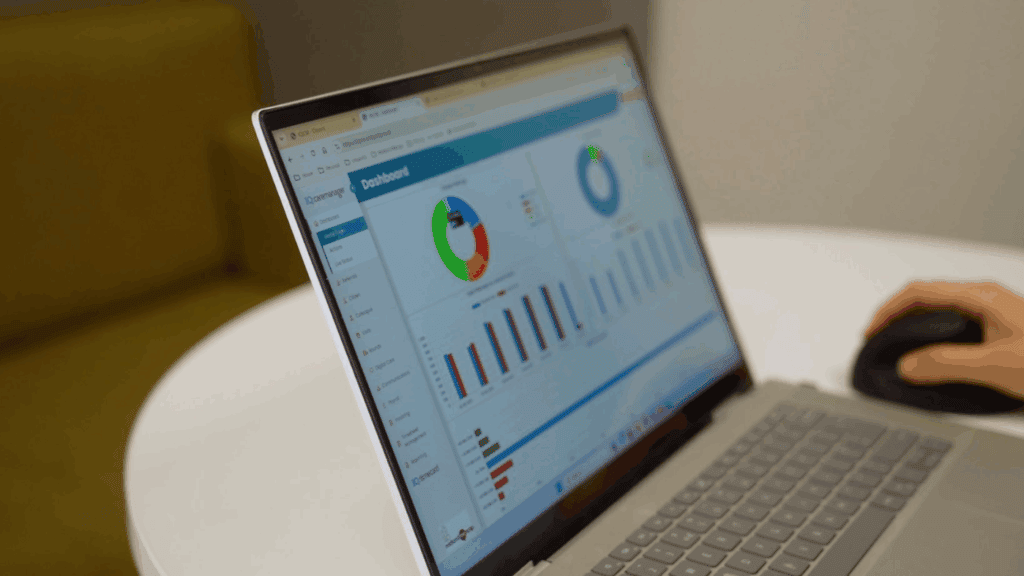
- Reporting and data dashboards: configurable views of service delivery, compliance, workforce and finance, plus custom report building.
- Secure two-way communication: in-platform messaging carers can genuinely reply to, keeping client information out of WhatsApp and personal phones.
- Payroll and invoicing integration: pay and invoices calculated from confirmed visit times, with no manual duplication.
- Implementation support and ongoing service: data migration, training and a real person to speak to when something goes wrong.
Unique IQ has built home care management software since 2006 and brings all ten together in IQ:caremanager. Its AI care planning tool, IQ:careassist, reduces care plan creation time by 96%, and IQ:careaudit reviews care notes in real time to flag medication and safeguarding concerns as they happen.
Choosing the right home care management software features for your agency is one of the biggest operational decisions you will make. The right platform saves hours of admin every week, keeps your team compliant, and gives you the real-time oversight you need to deliver outstanding care. The wrong one creates more problems than it solves.
With so many options now available, it can be difficult to know what truly matters. This guide cuts through the noise and sets out the features every UK home care agency should insist on.
1. CQC-ready compliance tools
Compliance is not optional in home care, and your software should make it easier, not harder, to evidence it. Look for a platform that produces audit-ready records automatically, flags gaps in documentation before they become inspection risks, and gives managers a clear view of service quality across all clients and carers.
IQ:careaudit from Unique IQ does exactly this, reviewing care notes and visit logs in real time to flag medication issues, safeguarding concerns, and incomplete records before they escalate.
2. Electronic call monitoring (ECM)
Electronic call monitoring allows office staff to track carer attendance at visits in real time, without relying on manual timesheets or phone calls. Carers clock in and out via a mobile app or landline, with GPS confirmation of their location. This is essential for lone worker safety, payroll accuracy, and demonstrating service delivery to commissioners and CQC inspectors.
3. AI-assisted care planning
Care planning is one of the most time-consuming tasks in domiciliary care. AI-assisted care planning tools guide care workers through creating and updating plans with structured prompts and suggested language, reducing the time spent drafting while improving consistency and quality across the service.
Unique IQ’s IQ:careassist reduces care plan creation time by 96%, helping teams produce thorough, person-centred documentation in around seven minutes rather than several hours.
4. Mobile-first carer app
Your care workers are out in the field all day. They need software that works on their phones, loads quickly, and gives them everything they need for each visit: care plans, medication records, task lists, and the ability to add notes and clock in and out. A poor mobile experience leads to incomplete records and frustrated staff.
5. Real-time rostering and scheduling
Managing a large, dispersed workforce requires scheduling tools that can handle complex rotas, last-minute changes, and continuity of care requirements. Look for best-match algorithms that consider carer skills, client preferences, travel time, and contracted hours, and that push schedule changes to carers’ phones instantly.
6. Integrated eMAR (electronic medication administration records)
Medication errors are a serious risk in home care. An integrated eMAR system ensures medication records are accurate, up to date, and flagged immediately when something is missed or recorded incorrectly. For the best results, look for an eMAR solution that connects directly with your care plans and visit records, so information flows seamlessly across your whole service without manual duplication.

7. Reporting and data dashboards
Good software turns your operational data into insight. Look for configurable dashboards that give managers a real-time overview of service delivery, compliance, workforce performance, and financial metrics. Custom report builders allow you to interrogate your data for the specific questions your business needs to answer.
8. Secure two-way communication
Effective communication between office staff and carers reduces missed visits, errors, and safeguarding risks. Look for a platform with built-in two-way messaging that allows real-time communication, so carers can flag concerns immediately and managers can respond, without relying on personal mobile numbers or WhatsApp groups. Many tools only offer one-way broadcast messaging, so check that carers can genuinely reply, not just receive.
There is a compliance reason to keep this in-platform too. When client information is shared through WhatsApp or other third-party apps on carers’ personal phones, it sits outside your control, with no audit trail and no way to manage access. If a carer leaves, that conversation history, potentially including names, addresses and health details, goes with them. A built-in communication tool keeps every message access-controlled, retained in your records and switched off the moment someone leaves, so sensitive information stays inside your regulated system.

9. Payroll and invoicing integration
Manual payroll calculations based on visit data are time-consuming and error-prone. Your care management software should calculate payroll automatically from confirmed visit times, integrate with your accounting software, and produce invoices for commissioners without manual duplication of work.
10. Implementation support and ongoing customer service
The home care management software features outlined above give you a strong framework for evaluating your options, but software is only as good as the support behind it. Before committing, ask prospective providers how they handle implementation, data migration, staff training, and ongoing technical support. A provider with deep sector experience will understand the pressures your team is under and respond accordingly.
At Unique IQ, every new customer is supported by a dedicated implementation team with years of experience in home care. Many of our team come from a care background themselves, so they understand the realities you face day to day, not just the software. And when you need help, you speak to a real person, not a bot, an automated menu, or a ticket queue that goes nowhere. In a sector where problems need real answers and relationships matter, that human support is one of the things our customers value most.
What home care management software features should you prioritise?
The home care management software features that matter most will depend on the size of your agency, your client mix, and your current compliance challenges. However, the ten features above represent the baseline every UK domiciliary care provider should expect from any modern platform. Use them as your checklist when evaluating options and asking providers for a demo.

Choosing home care management software features: what to ask before you commit
Frequently asked questions about home care management software
What is home care management software?
Home care management software is a digital platform that brings together all the core functions of running a domiciliary care agency, including scheduling and rostering, electronic care planning, visit notes, electronic medication administration records (eMAR), carer mobile apps, client and family portals, invoicing and CQC compliance documentation. The best systems are purpose-built for home care rather than adapted from residential care or generic workforce tools.
Which home care software feature is most important?
Compliance tools are arguably the most critical, as CQC inspection readiness affects your registration and reputation. However, mobile access and real-time scheduling are equally important for day-to-day operations. The right priority depends on your agency size, client mix and current compliance challenges, but most UK home care providers should expect all three as a baseline from any modern platform.
Do I need eMAR for medication management?
Yes, for most home care providers. Medication management is a high-risk area and electronic medication administration records (eMAR) significantly reduce the chance of errors and omissions compared to paper MAR charts. eMAR provides real-time alerts for missed or refused medication, electronic timestamping for audit purposes and clear evidence of safe medication practice for CQC inspections.
What is electronic call monitoring (ECM) in home care software?
Electronic call monitoring (ECM) is a system that allows care managers to track when carers arrive and leave client visits in real time. ECM uses GPS, geofencing or NFC tags to verify visit attendance, alert managers to late or missed visits and provide a tamper-proof audit trail. ECM is now an expected feature in any modern home care management platform.
How much does home care management software cost in the UK?
UK home care management software is typically priced per carer per month. Total cost depends on agency size, the features included, implementation support and whether AI tools are bundled in. Most providers offer tiered packages, with bespoke pricing for larger agencies or those with more complex requirements.
What is the difference between home care software and residential care software?
Home care software is built around domiciliary delivery, with features like geographic rostering, GPS-enabled carer apps for visits in clients’ homes, route optimisation and electronic call monitoring. Residential care software is built for fixed-site care homes and prioritises shift-based rostering, occupancy management and on-site medication rounds. Using residential software for home care delivery typically creates significant operational friction.
Is home care management software required for CQC compliance?
Home care management software is not a strict CQC requirement, but it is now widely expected. Digital records make it significantly easier to evidence safe care, audit trails, medication management and management oversight across all five CQC key questions. The NHS England DSCR programme is also pushing providers toward digital records as a contractual expectation from commissioners.
How long does it take to implement home care management software?
Implementing home care management software typically takes between 4 and 12 weeks for a UK home care agency, depending on size, complexity and how much data needs migrating from existing systems. A phased approach starting with scheduling and visit recording, followed by eMAR and care planning, reduces operational risk and helps carers adapt to the new system gradually.
Ready to see these features in action? Book a personalised demo with Unique IQ and discover how our award-winning care management software supports UK home care agencies every day.
Alternatively Let’s talk. Tell us what you’re using today and we’ll show you exactly how IQ:caremanager fills the gaps. No pressure, no jargon.