

There’s a particular frustration that comes with AI-assisted writing in care. The plan it produces is accurate, it’s structured, it covers what it should, and yet it doesn’t sound like anything your team would write.
Sometimes that’s a matter of voice. A plan written about someone reads differently to a plan written as though they’re speaking. Sometimes it’s register. Language that works for an inspection-ready record can feel oddly cold in a section about someone’s preferences, and language that feels warm and person-centred can lack the precision you need when the risk is high.
Until now, IQ:careassist made those choices for you. From this release, they’re yours.
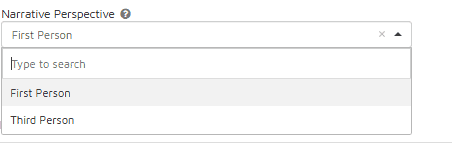
First person or third person, decided before generation
You can now choose the narrative perspective of a generated care plan.
First person reads in the individual’s own voice:
“I prefer to take my medication in the morning.”
Third person keeps the traditional record style:
“Helen prefers to take her medication in the morning.”
Neither is universally correct, which is exactly why it needed to be a choice. Providers building strengths-based, person-centred documentation often want the individual’s voice on the page. Others, particularly those working closely with commissioners or clinical colleagues, need the consistency of third person throughout.
Your organisation’s default sits in your settings and can be changed whenever you need. Previously this was fixed in code and moving between the two meant waiting for a release, so this is a practical improvement as much as a stylistic one.
Three tones, chosen per plan
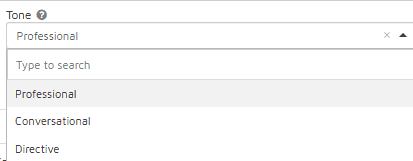
Before generation begins, you can select the tone the plan is written in.
Professional is formal, structured and clinically appropriate. It suits regulatory and compliance contexts where the record needs to read as inspection-ready.
Conversational is warmer and more person-centred, closer to how the individual themselves might express things. It works particularly well for sections covering strengths, preferences and daily routines.
Directive is clear and action-oriented, with explicit expectations. It comes into its own for higher-risk clients, where a carer reading the plan at seven in the morning needs to know exactly what to do rather than infer it.
The point isn’t that one tone is better. It’s that a single care plan format serving a whole organisation was always a compromise, and it no longer has to be.
Applied across risk assessments too
Perspective and tone don’t stop at care plan sections. They also carry through to Generate Physical Risk Assessment and Generate Moving and Handling Risk Assessment.
That matters more than it might sound. A document that shifts voice halfway through reads as though it was assembled rather than written, and inconsistency of that kind is exactly what draws an inspector’s eye. Applying the settings across the whole document keeps it coherent.
Guidance notes: the rules are written in plain English
Underneath the tone and perspective controls sits something more fundamental.
Guidance notes are the written instructions that tell IQ:careassist how your organisation wants each care plan section written. What to include. What to emphasise. What to leave out. How to phrase things.
They’re written in plain English, not code, and they’re held against your care plan template. For providers operating across multiple offices, guidance can be set at group level with overrides where local practice genuinely differs, so a national standard and local variation can coexist rather than compete.
This is also where control over detail lives. Sections that need narrative can have it. Sections that don’t can be set to a short answer or a straight yes or no, and sections can skip generated titles entirely. The balance of detail across a plan becomes something you can adjust and refine, rather than something that requires a change from us.
A record of what produced every plan
Every change to your guidance is versioned. When a care plan is generated, IQ:careassist records which template and which version of your guidance produced it, section by section, including when a section is regenerated.
This is the part we’d encourage you to look at hardest, because it’s the part that answers the question care leaders are increasingly being asked: how do you know what your AI did, and can you show us?
Plenty of tools now offer AI assistance in care. Considerably fewer can tell you what instructed the output, when those instructions changed, and precisely what was in force on the day a particular plan was written. If you ever need to investigate or explain a care plan, whether for your own governance or for a regulator, the trail exists.
What we’re still working on
We’re continuing to work on how sections reference one another rather than restating the same information, and on giving you more control over length section by section. Both have come directly from customer feedback, and both are in progress rather than delivered.
If you generate a plan and something doesn’t read the way you’d expect, tell us. Customer feedback is genuinely what orders this work, and this release exists because providers told us that writing style wasn’t a detail, it was the difference between a plan their team would use and one they’d rewrite.
In summary
The human stays in charge throughout. IQ:careassist drafts, your team reviews, edits and signs off. What’s changed is that the draft now starts from your organisation’s standard rather than a generic one, and you can see exactly what shaped it.
We’ve been building software for domiciliary care since 2006, and we were the first in the homecare software market to build AI into the platform natively rather than bolting on a third-party tool. This release is a good example of why that matters: the controls sit where the work happens, not in a separate system.
Already using IQ:careassist? The new options are live now, and our support team are on 0800 888 6868 if you’d like a hand getting set up. Not using it yet? Book a walkthrough and we’ll show you how it would work with your care plans.