
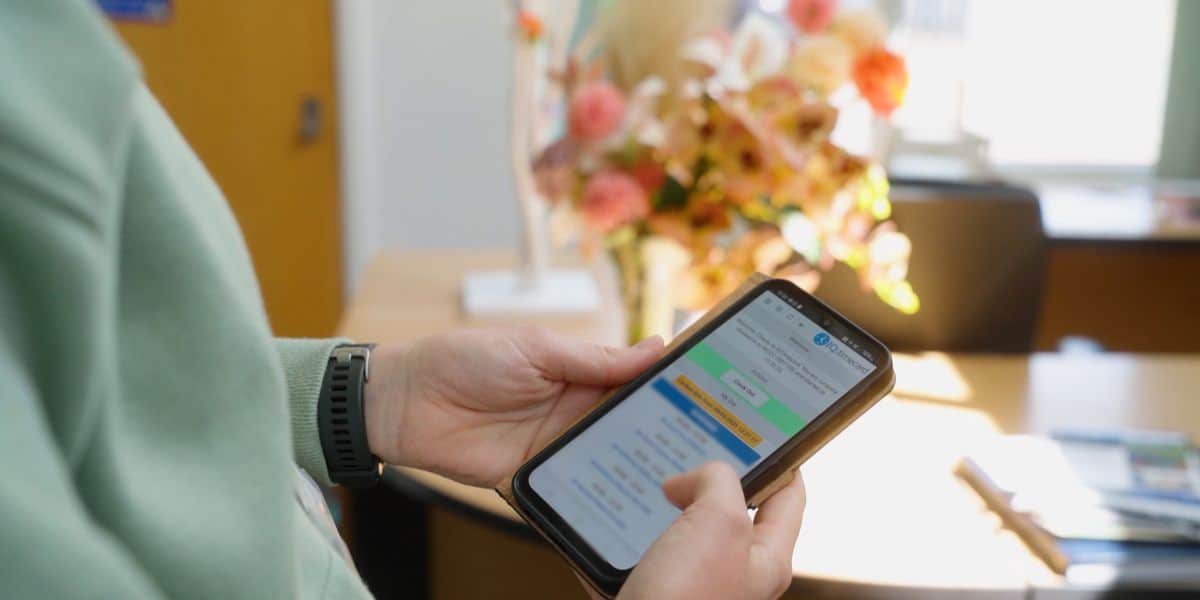
Mobile visit notes are the digital record a carer creates at the point of care, on a phone or tablet, during or immediately after a home visit. They have quietly become one of the most important records a domiciliary care agency holds. Done well, they capture exactly what happened on a visit, in the moment, and feed directly into an agency’s CQC evidence. Done badly, they leave gaps that surface at the worst possible time: during an inspection, a complaint, or a safeguarding review.
This guide explains what mobile visit notes are, why they matter so much for UK home care providers in 2026, what separates a good note from a poor one, and how to help carers record notes that genuinely protect clients and the agency.
What are mobile visit notes?
Mobile visit notes are the electronic replacement for the paper logbook that used to sit in a client’s home. Instead of writing in a folder on the kitchen table, a carer records the visit on a mobile app: what care was delivered, how the person was, any changes in their condition, medication given, food and fluids, and anything that needs following up.
Because the note is created on a mobile device, it is timestamped, attributed to the named carer, and synced back to the office in real time, or as soon as the device regains signal. That single shift, from paper left in the home to a digital record visible to coordinators immediately, changes how responsive and how safe an agency can be.
Why mobile visit notes matter more in 2026
Two forces have raised the stakes for visit notes specifically. The first is the CQC’s Single Assessment Framework, which is heavily evidence-led. Inspectors increasingly want to see structured, timely records that show how care is actually delivered, not just that a visit took place. Visit notes are a primary source of that evidence.
The second is the wider move from paper to digital social care records (DSCR) across the sector. As agencies digitise, the quality of what carers record at the point of care becomes the foundation everything else rests on. Rostering, auditing and reporting are only as good as the notes feeding them.
A polished dashboard built on thin or late visit notes tells managers very little.
What good mobile visit notes look like
The difference between a useful visit note and a box-ticking one is significant. Strong notes share a few characteristics.
They are specific. “Client well, all tasks completed” tells a coordinator almost nothing. “Mrs Patel ate a full breakfast, took morning medication at 8:10am, mood bright, mentioned her left knee was sore on the stairs” gives a real picture and flags something to watch.
They are timely. A note written in the home, at the time of the visit, is far more accurate than one reconstructed from memory hours later. Mobile recording at the point of care is what makes this possible.
They record change, not just routine. The most valuable notes flag what is different: a skipped meal, a new bruise, low mood, a medication refusal. These are the early signals that allow proactive care and that inspectors look for evidence of.
They are objective and respectful. Notes form part of a person’s care record and may be read by the client, their family, inspectors or a court. Good notes describe what was observed in plain, factual, dignified language.
Examples of good and weak mobile visit notes
The quickest way to raise note quality is to show carers the difference. Here are three weak notes and how each could be improved.
Weak: “Visit done, client fine.”
No detail, no care recorded, no observations, no name or time. It tells a coordinator nothing and provides no evidence at inspection.
Weak: “Gave meds, she was in a mood.”
Records something, but “in a mood” is a judgement, not an observation, and there’s no detail on which medication, when, or whether it was taken. A note like this could create problems in a complaint or safeguarding review.
Stronger: “08:10 — supported Mrs Ahmed with morning medication (taken in full). She ate a full breakfast. Mentioned her left knee felt stiff on the stairs, no swelling seen. Mood bright. Flagged knee to office to review at next visit.”
This records the care delivered, the time, an objective observation, an action taken, and a follow-up, all in a few seconds of recording at the point of care. It is specific, factual and respectful, and it gives the office something to act on.
The pattern to coach carers towards is simple: what I did, what I observed (including anything different), and what happens next.
How mobile visit notes support CQC compliance
Visit notes feed directly into several of the CQC’s five key questions. Under Safe, they evidence that medication was given and that risks were spotted and acted on. Under Responsive, they show that care adapted to the person’s changing needs. Under Well-led, the ability of managers to see notes in real time and act on them demonstrates effective oversight and governance.
The strongest home care platforms turn this into something automatic. Because every note is timestamped, attributed and stored centrally, the evidence an inspector asks for already exists, rather than needing to be assembled from paper folders scattered across clients’ homes. The Homecare Association offers useful independent guidance on evidencing quality as part of its member resources.
The offline problem, and why it matters
Home care happens in people’s homes, including rural areas and buildings where mobile signal is poor or absent. If a visit notes app only works online, carers in those settings either cannot record at the point of care or lose what they have written. Both undermine the entire purpose of mobile notes.
This is why offline capability is non-negotiable for UK home care. A carer should be able to open the app, read the care plan, and record a full visit note with no signal at all, with everything syncing automatically the moment connectivity returns. Nothing lost, nothing delayed. When evaluating any system, this is one of the first things to test in a live demonstration. Offline working is one of the features that separate the best home care software from the rest.
Helping carers record better notes
Even the best software depends on the people using it. A few practical steps make a real difference to note quality across a team.
Keep the recording process quick and structured, so carers can capture what matters without fighting the interface or spending time that should be spent with the client. Offer simple prompts or templates that nudge carers to record condition, mood, food, fluids and medication, not just task completion. Train carers on what good looks like, using real (anonymised) examples of strong and weak notes. And give feedback: when coordinators read notes and respond to them, carers see that their recording matters and the standard rises.
Frequently asked questions
What are mobile visit notes in home care?
Mobile visit notes are the digital record a carer creates on a phone or tablet during or immediately after a home care visit. They capture what care was delivered, how the person was, any changes in condition, medication given, and anything needing follow-up. Because they are recorded on a mobile device, they are timestamped, attributed to the named carer, and synced to the office in real time, replacing the old paper logbook left in the client’s home.
Why are mobile visit notes important for CQC compliance?
Mobile visit notes are a primary source of evidence for the CQC’s Single Assessment Framework, which is heavily evidence-led. They feed directly into several of the five key questions: evidencing medication administration and risk management under Safe, showing care adapting to changing needs under Responsive, and demonstrating real-time managerial oversight under Well-led. Because the notes are timestamped, attributed and stored centrally, the evidence an inspector requests already exists rather than needing to be assembled manually.
What makes a good mobile visit note?
A good mobile visit note is specific rather than generic, timely rather than reconstructed from memory, and focused on recording change as well as routine. It describes what was observed in plain, factual and respectful language, since the note forms part of a person’s care record and may be read by the client, their family, inspectors or a court. Notes that simply state “client well, all tasks completed” provide little evidential or clinical value.
Do mobile visit notes work without an internet connection?
The best home care systems let carers record visit notes fully offline. Home care often takes place in rural areas or buildings with poor mobile signal, so an app that only works online leaves carers unable to record at the point of care. A strong system allows the carer to read the care plan and record a complete note with no signal, then syncs everything automatically once connectivity returns, so nothing is lost or delayed.
How can agencies improve the quality of carers’ visit notes?
Agencies can improve note quality by keeping the recording process quick and structured, offering prompts or templates that encourage carers to record condition, mood, food, fluids and medication rather than just task completion, and training carers using real anonymised examples of strong and weak notes. Giving feedback matters too: when coordinators read and act on notes, carers see that their recording is valued, and standards rise across the team.
How Unique IQ approaches mobile visit notes
Unique IQ has been building software for the UK care sector since 2006, across home care, domiciliary care, supported living, complex care and more. Our carer app lets care workers record visit notes at the point of care, view the client’s care plan and tasks, and log medication, even when mobile connectivity is limited, with everything syncing back to the office automatically. Because notes are timestamped, attributed and centrally stored, they become part of an agency’s CQC evidence as a by-product of everyday work. Our AI-powered auditing can then analyse those notes in real time to surface risks early, turning the record carers create into proactive insight rather than a static log.
Next step: Book a demonstration with the Unique IQ team to see how mobile visit notes work in practice.