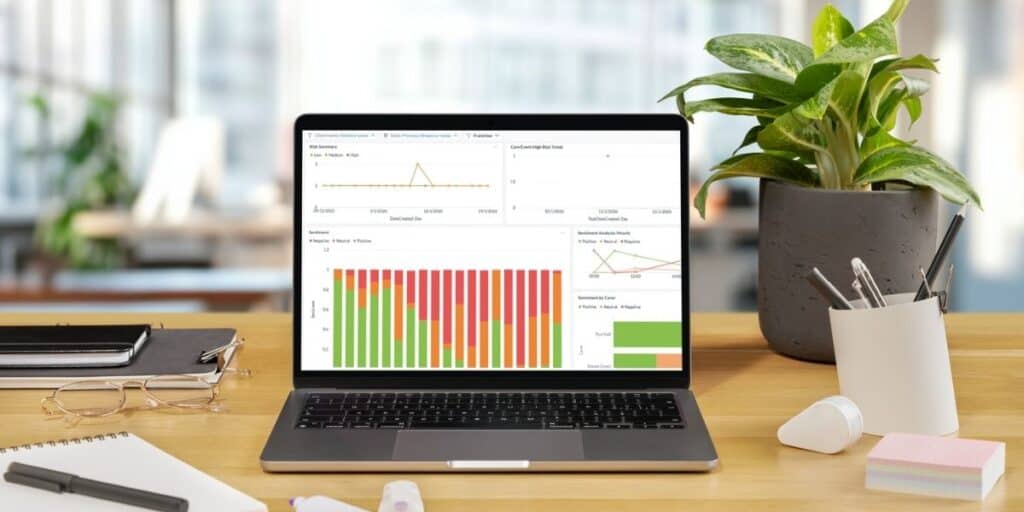
Our interactive CQC inspection checklist for home care is built around the proposed 2026 framework. It covers all five inspection domains, maps 50 evidence requirements to the draft Key Lines of Enquiry and calculates a live readiness score as you answer. It works in any web browser, with nothing to download. Built for home care providers preparing for inspection, contract renewals or internal assurance reviews.
Get instant access to the checklist
What is inside the checklist
Three things this CQC inspection checklist for home care does that a regular PDF cannot.
The full CQC inspection checklist for home care, across all five domains
Safe, Effective, Caring, Responsive and Well-led. Fifty specific evidence requirements mapped to the draft 2026 Key Lines of Enquiry, written in plain English, ready to work through with your team.
A live CQC readiness score for your home care service
As you answer Yes, Partial or No for each requirement, the checklist auto-calculates a percentage readiness score for your service and a tier: Inspection Ready, Strong Foundations, Gaps to Address, or Significant Risk. You see exactly where your strengths and gaps are, by domain.
Priority actions, ready for your next management meeting
Every requirement you mark No or Partial is pulled into an automatic priority action list, with the Safe and Well-led domains first as these carry the most weight with inspectors. Print it or save it as a PDF to take into your next management meeting.
Why the proposed 2026 CQC framework matters for home care
In March 2026, the Care Quality Commission published draft sector-specific assessment frameworks for consultation. The proposals reintroduce Key Lines of Enquiry in place of quality statements, and remove numerical scoring in favour of qualitative, evidence-based assessment. The consultation closed in June 2026, and CQC expects to confirm the final framework and begin implementation towards the end of 2026.
For home care providers, the proposed shift puts more weight on three things: outcomes rather than tasks, evidence rather than assurance, and governance rather than intent.
That is a positive shift for providers running a tight service, but it raises a practical question worth answering before the new framework goes live: how easily do your current systems help you gather, store and surface the evidence inspectors will expect?
This CQC inspection checklist for home care is the quickest way to benchmark where your service stands. Most of the underlying evidence requirements carry across from the current Single Assessment Framework, so working through the checklist will also strengthen your readiness for inspection today. No commitment. No sales call attached. Just an honest view of your readiness.

Frequently asked questions about CQC inspection for home care
What does the CQC look for in a home care inspection?
The CQC assesses home care services against five key questions: Safe, Effective, Caring, Responsive and Well-led. Inspectors look at evidence of safe medication management, robust care planning, person-centred care delivery, responsive complaints handling and strong governance. Under the proposed 2026 framework, inspectors will focus on outcomes for people using the service rather than process compliance.
How often does the CQC inspect home care services?
The CQC does not follow a fixed inspection schedule for home care services. Inspection frequency is risk-based, with services rated Outstanding or Good typically inspected less often than those rated Requires Improvement or Inadequate. Most home care providers can expect a comprehensive inspection within three to five years of their last, though the CQC can inspect at any time in response to concerns.
What is the difference between the current CQC framework and the proposed 2026 framework?
The proposed 2026 framework reintroduces Key Lines of Enquiry in place of quality statements and removes numerical scoring in favour of qualitative, evidence-based assessment. The five key questions remain the same, but the focus shifts toward outcomes, evidence and governance rather than process and intent. The consultation closed in June 2026, with implementation expected at the end of 2026.
How can home care providers prepare for a CQC inspection?
Home care providers should regularly audit their service against the CQC’s five key questions, maintain comprehensive evidence of care delivery, and run mock inspections using a structured checklist. Digital care management systems make evidence gathering significantly easier by providing real-time records, automated audit trails and management dashboards that surface compliance gaps before inspectors find them.
What is a CQC Outstanding rating and how do home care providers achieve it?
A CQC Outstanding rating is awarded to home care services that provide exceptional care across all five key questions, with particular strength in Well-led. Outstanding providers demonstrate innovative practice, measurable outcomes for people using the service, strong staff development and governance systems that give leaders real-time oversight of quality and risk.
What evidence do CQC inspectors look at during a home care inspection?
CQC inspectors review care plans, medication records, training records, safeguarding logs, audit reports, governance meeting minutes, complaints data and feedback from people using the service. They also speak with carers, registered managers and people receiving care. Digital records that show real-time timestamping and full audit trails are increasingly seen as strong evidence of safe, well-managed care.
How the CQC inspection checklist for home care works
Three steps:
01. Get instant access
Fill in the form and you’ll get a link to go straight to the online checklist. It works on a computer, tablet or phone, with no software to download.
02. Answer as a team
Work through the 50 requirements with your registered manager or operations lead, answering Yes, Partial or No for each one.
03. See your readiness score
Your overall score, readiness level and domain breakdown update as you go, and your priority actions are listed automatically. Print or save your results as a PDF when you’re done.
Built for home care providers, trusted for 20 years
Unique IQ is an award-winning home care management software provider. Since 2006, we have worked alongside domiciliary, supported living, reablement and live-in care providers across the UK. The Unique IQ platform brings AI-assisted care planning and real-time visit note auditing to the home care software market.

FAQ: CQC inspection checklist for home care
Is this CQC inspection checklist really free?
Yes. No trial, no paywall. Fill in the form and you’ll get instant access.
How long does it take to complete?
It depends on how thoroughly you want to gather evidence as you go. Most management teams complete a first pass in one sitting and use the checklist as a working document afterwards.
Does it need any special software?
No. The checklist works in any web browser, on a computer, tablet or phone. When you’ve finished, you can print your results or save them as a PDF.
Who is this checklist for?
Home care providers preparing for CQC inspection. That includes domiciliary, supported living, reablement and live-in care providers. The checklist is built around the draft 2026 Key Lines of Enquiry, so it gives you an early read on the proposed new framework while remaining useful for inspection prep under the current Single Assessment Framework. It works for any size of agency, from smaller operators with 20 carers upwards.
Will you contact me after I sign up?
We may send occasional care sector insights and updates from the Unique IQ team. You can unsubscribe at any time from any email we send you.
Who wrote this checklist?
The Unique IQ team, drawing on the draft 2026 CQC framework, the proposed sector-specific Key Lines of Enquiry, and 20 years of working alongside home care providers.
Go beyond the checklist with real-time CQC auditing for home care
IQ:careaudit is AI-powered, real-time auditing built for home care. It reviews visit notes and medication records as they come in, flags risks and compliance issues before they escalate, and alerts managers to reviews and risk assessments that are due or overdue. Your management team gets a live view of where attention is needed across the service.