

Achieving a CQC Outstanding rating for your home care service is one of the most significant accomplishments available to a registered provider. It signals to commissioners, clients and the public that your agency is not just meeting the minimum standard – it is genuinely excelling. And yet, fewer than one in twenty registered home care services achieves it.
Outstanding is not simply a destination you arrive at by doing the right things during an inspection. It is the result of sustained, embedded excellence across every aspect of your operation: your leadership, your culture, your systems, your carers and the experience of every person you support. A CQC Outstanding home care rating, in the best agencies, is almost a by-product of the way they work – not a special event they perform for inspectors.
This guide explores what the CQC looks for when determining whether a home care service is Outstanding, what distinguishes the best providers from those rated as Good, and what practical steps you can take – including the role of technology – to move your agency in the right direction.
Understanding CQC Outstanding in home care
The CQC uses five key questions to assess all registered care services: Is it Safe? Is it Effective? Is it Caring? Is it Responsive? Is it Well-led? To achieve an overall Outstanding rating, a service typically needs to achieve Outstanding in at least one of these areas, while maintaining at least Good across all others.
Exceptional practice in the context of these questions means going significantly beyond compliance. It means not just meeting the standard for safe medication management but having systems that proactively identify and prevent medication errors before they occur. It means not just maintaining care plans but having care plans that are so thoroughly person-centred, so regularly reviewed and so genuinely reflective of what matters to each individual, that clients and their families describe them as transformative.
The language the CQC uses for Outstanding consistently includes words like “innovative”, “pioneering”, “exceptional” and “exemplary”. These are high bars – and the evidence required to meet them must be proportionate to the claim. The CQC’s guidance on ratings sets out in detail what each rating level requires across all five key questions.
The five key questions: what excellence looks like
For Safe, Outstanding means more than just avoiding harm. It means having proactive risk management systems, a learning culture that treats every incident as an opportunity to improve, medication management that goes beyond accurate recording to genuinely engaging carers in the importance of what they are doing, and safeguarding awareness so embedded in daily practice that it requires no prompting.
For Effective, Outstanding means investment in staff development that goes beyond mandatory training, evidence that care outcomes are being achieved and improving over time, and involvement of people in their own care in a way that demonstrably makes a difference to how the service is designed and delivered. Skills for Care publishes useful frameworks for evidencing workforce quality and development under this domain.
For Caring, Outstanding means evidence of exceptional compassion and dignity – not just from paperwork but from the testimony of clients, families and observers. For Responsive, it means services genuinely tailored to individual needs and preferences, with robust mechanisms for receiving and acting on feedback. For Well-led, it means visionary, values-driven leadership with a clear strategy for continuous improvement, evidenced by data.
Building a CQC Outstanding evidence base
One of the most important things to understand about CQC inspection is that inspectors are looking for consistency. It is not enough to have a strong policy – the policy must be followed. It is not enough for some care plans to be excellent – they need to be excellent across the service. It is not enough for one manager to be able to articulate the improvement journey – multiple leaders and carers should be able to describe it coherently and independently.
This means that the evidence-building process for a CQC Outstanding home care rating is not something you do before an inspection – it is something you do every day, as a natural by-product of running your service well. Every care note is evidence. Every completed training module is evidence. Every documented incident investigation and subsequent improvement is evidence. Every client feedback survey response is evidence.
Digital care management systems are enormously helpful here. They generate, timestamp and organise evidence automatically as part of normal operations. A manager using a good care management platform can pull together a comprehensive evidence portfolio for each CQC key question in hours rather than the days it might take to compile the same information from paper records.

What inspectors look for: the human element
Evidence files, policies and digital records are important, but inspectors give significant weight to the human dimension of their assessment. They will speak directly with clients and their families. They will observe interactions between carers and clients wherever possible. They will have unstructured conversations with carers about safeguarding, medication, dignity and the values of the organisation.
These conversations are revealing. A carer who can speak confidently and with genuine conviction about why the work they do matters, who can describe exactly what they would do if they had a safeguarding concern, and who can give specific examples of how they have respected a client’s preferences, is providing powerful qualitative evidence under the Caring and Safe key questions.
Creating a workforce capable of these conversations is a leadership and culture challenge, not just a training exercise. Outstanding agencies invest in making their carers feel valued, knowledgeable and proud. The quality of those conversations during an inspection is a direct reflection of the quality of the organisation’s relationship with its workforce. The Homecare Association publishes sector research on workforce culture and its relationship to quality ratings that is worth reading alongside your inspection preparation.
Technology as an enabler of CQC Outstanding home care ratings
The role of technology in supporting a CQC Outstanding home care rating is both practical and evidential. Practically, good care management software reduces the administrative burden on managers and carers, freeing time and attention for the quality-focused activities that Outstanding ratings are built on. A coordinator who spends three hours less per week on manual rota-building has more time for quality monitoring, carer support and client relationship management.
Evidentially, digital systems generate the kind of robust, timestamped, audit-trail evidence that modern CQC inspection increasingly expects. Real-time visit data, electronic medication records, automated training renewal alerts and governance dashboards are all evidence-generating tools that support outstanding practice across multiple key questions.
Under the Well-led key question in particular, the ability to demonstrate data-driven governance – showing that your leadership team has real-time visibility of quality metrics and acts on what they see – is an increasingly important differentiator between agencies rated as Good and those rated as Outstanding. You can read more about how digital tools support Well-led governance in our guide to home care management software.
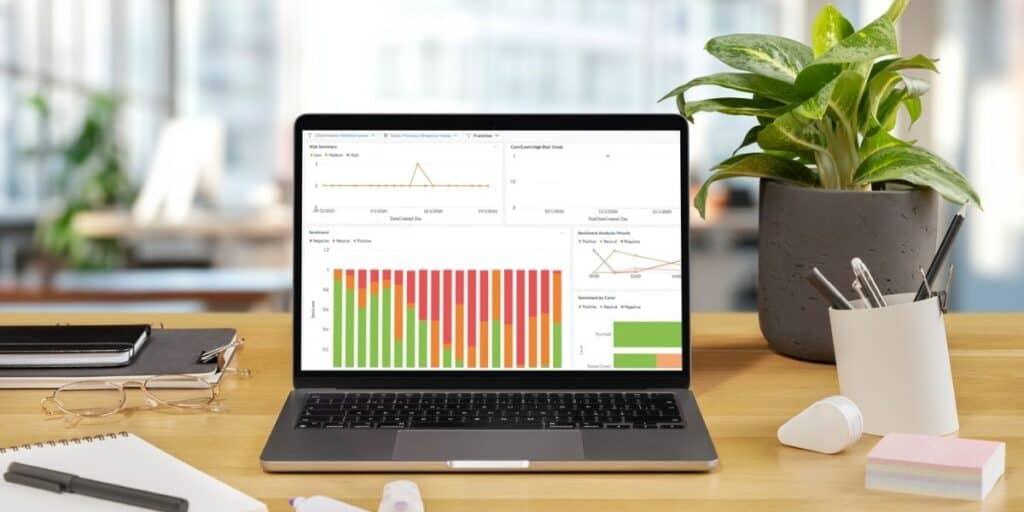
Two tools that make a particularly strong contribution to CQC evidence-building are IQ:careaudit and IQ:careassist, both part of Unique IQ’s AI suite. IQ:careaudit continuously reviews care visit logs and medication records the moment they are entered – flagging risks, compliance gaps and safeguarding concerns in real time. For CQC purposes this is powerful: rather than scrambling to compile evidence before an inspection, your audit trail is building itself every single day, automatically. Inspectors looking for evidence of proactive risk management and Well-led governance will find it readily available and thoroughly documented.
IQ:careassist adds a further layer of evidential strength. By guiding staff through care plan creation and updates with structured prompts and consistent language, it ensures that every care plan – not just the best ones – reflects the kind of thorough, person-centred detail that inspectors look for under Effective and Caring. The version history created each time a plan is updated also provides clear evidence of regular review and responsiveness to changing needs – exactly what Outstanding requires.
Together, these tools do not just make inspection preparation easier – they make the day-to-day practice that produces Outstanding ratings more consistent, more visible and more provably excellent.
Common reasons home care agencies miss CQC Outstanding
The most common reasons home care agencies with genuinely good services do not achieve Outstanding can be grouped into a few consistent patterns.
First, evidence gaps: the practice exists but is not documented in a way that an inspector can access and assess. Second, inconsistency: excellent practice in some areas is not matched across the whole service – certain care plans are excellent while others are superficial; some managers can articulate the improvement journey clearly while others cannot. Third, a compliance rather than excellence mindset: policies and processes are in place to meet the standard rather than to genuinely improve care, which inspectors can sense in the way leaders and carers talk about their work.
Addressing these patterns is not simply a matter of inspection preparation. It requires embedding quality into the day-to-day culture of the organisation and ensuring that technology, processes and people are aligned around the same commitment to excellence.
Practical next steps toward CQC Outstanding home care
If your agency has been rated as Good and is looking to move toward Outstanding, the most useful first step is a systematic review of your most recent inspection report. For each area rated as Good rather than Outstanding, ask two questions: what evidence would have made the difference? And what would the practice look like if it were genuinely exceptional rather than merely good?
Engage your team in this process. Outstanding agencies are built by teams who believe in what they are doing – not by managers working around their workforce. Share the inspection report openly. Discuss what a CQC Outstanding home care rating would look like in practice for each of the five key questions. Identify two or three specific, achievable improvement areas and focus on them consistently over the next six to twelve months.
Make sure your technology is supporting the evidence base you need. If your care management system is generating data but you cannot easily access or present it, that is a capability gap worth addressing. The right platform should make quality monitoring feel manageable, not like an additional burden. Find our more about how Unique IQ’s platform works in practice.
Next step: Book a demonstration with Unique IQ to see how our software supports CQC Outstanding evidence-building across your entire service.