
Artificial intelligence is moving quickly in social care, and many providers have been waiting for one thing before they commit: clarity from the regulator. The latest CQC AI guidance sets out how the regulator views artificial intelligence in health and social care, and the implications for home care providers are significant. The short version is encouraging, but there are conditions attached that every provider should understand. View the CQC latest guidance in full here.
There’s No Separate AI Rulebook
Perhaps the most important takeaway from the CQC AI guidance is what the regulator has chosen not to do. It is not creating a new, AI-specific regulatory framework or a separate assessment process for services that use AI. Instead, it is clarifying how existing regulation already applies to these tools.
To do this, CQC is working alongside NICE, the Medicines and Healthcare products Regulatory Agency and the Health Research Authority through the AI and Digital Regulations Service. The aim is to bring guidance from across the regulatory landscape into one place, so that providers and developers can navigate the rules without getting lost between different bodies.
For providers, this removes a major source of uncertainty. The standards you already work to, around safe, effective, caring, responsive and well-led care, are the same standards that apply when AI enters the picture.

Innovation Is Welcomed, With Conditions
CQC has been consistent that it encourages innovative technology where it genuinely benefits the people who use services. AI is not something to be feared or avoided. Used well, it can ease administrative pressure, surface risks earlier, and free up time for the human side of care.
The conditions are equally clear. AI must support safe, person-centred care rather than dilute it. Human oversight has to be retained, so that professional judgement always sits behind the decisions that affect someone’s wellbeing. And the governance around how a tool is used needs to be sound and demonstrable.
In other words, the regulator’s expectations and good care practice point in the same direction. That alignment makes the path to adoption far clearer than many providers assume.
The Documentation Warning Providers Shouldn’t Miss
There is a cautionary note worth dwelling on. A growing number of providers have started using general-purpose AI tools to draft policies, procedures and audit documentation ahead of inspection. This is where things can go wrong.
Where AI produces documentation that is generic, internally inconsistent, or disconnected from how a service actually operates, it can do real damage. Inspectors are likely to cross-check policies against each other and against the reality on the ground. Documentation that feels templated or contradictory can undermine confidence in a provider’s governance and leadership, and in the most serious cases, contribute to enforcement action.
The lesson is not that AI has no place in compliance. It’s that the tool matters. Software designed for care, with a clear, traceable evidence trail, strengthens your position. A generic writing tool that invents plausible-sounding text does the opposite.
What Good AI Adoption Looks Like in Practice
For home care providers, the practical question is no longer whether the regulator will permit AI. It’s whether a given tool keeps your team in control and your evidence sound.
A few principles help here. Choose AI that is purpose-built for care rather than repurposed from a general tool. Make sure a qualified person reviews and signs off anything that informs care decisions, so the human stays in the loop. Look for tools that create a clear record of what was suggested, what was changed, and who approved it, so your evidence trail holds up under scrutiny. And check where your data actually lives, because the security and governance sitting behind a tool matters just as much as the feature itself.

How Unique IQ Approaches Responsible AI
This is the thinking behind how we built AI into our own platform, and it maps closely onto what the CQC AI guidance describes.
Our AI is built natively into the Unique IQ platform, not bolted on as a third-party add-on. That matters for governance, because it means your care data is handled within a single, secure environment rather than being passed out to separate external tools. The platform is hosted on Microsoft Azure, giving you enterprise-grade security, data protection and resilience as standard, the kind of foundation the CQC AI guidance expects providers to be able to demonstrate.
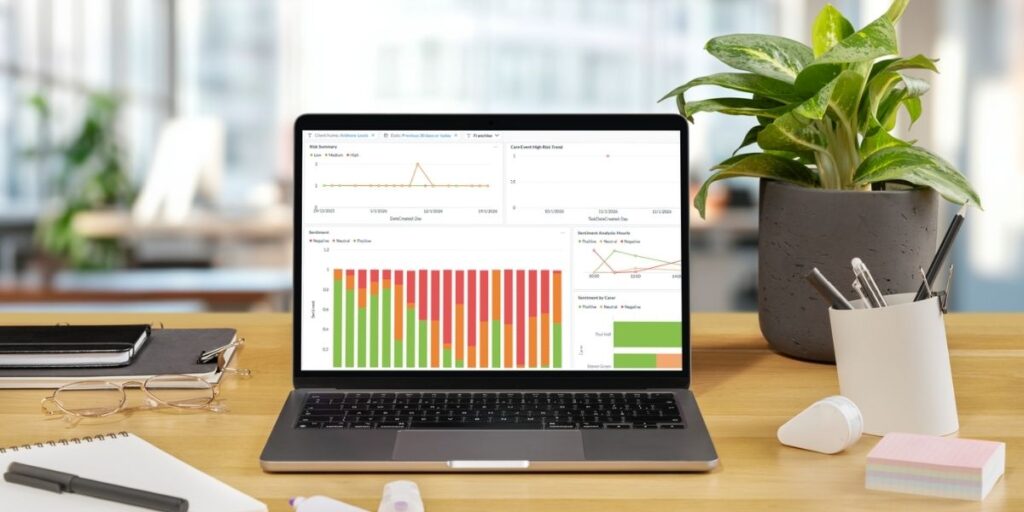
On top of that foundation sit two purpose-built AI tools. IQ:careassist co-authors care plans alongside the carer, never instead of them, keeping the professional firmly in control. IQ:careaudit reviews visit notes in real time to flag risks before they escalate, strengthening your evidence trail rather than replacing human judgement. Both were designed around exactly the principles the regulator is now setting out: human oversight, person-centred care, and governance you can prove.
For multi-branch providers, Defined Access Rights add a further layer of control, letting you decide exactly who can see what across your sites. And if you ever need support, you speak to a real person, not a chatbot, which in a regulated, relationship-led sector is a difference that genuinely counts.
CQC AI Guidance: Frequently Asked Questions
Does CQC have a separate framework for AI in care?
No. The CQC AI guidance confirms the regulator is not creating a separate AI-specific framework or assessment process. Instead, CQC is clarifying how existing regulation already applies to AI tools, working alongside NICE, the MHRA and the HRA through the AI and Digital Regulations Service. The standards you already work to apply equally when AI is used.
Is AI allowed in CQC-regulated care services?
Yes. CQC actively encourages innovative technology where it genuinely benefits the people who use services. The conditions are that AI must support safe, person-centred care, that human oversight is retained so professional judgement sits behind every decision, and that the governance around how the tool is used is sound and demonstrable.
Can using AI affect a CQC inspection outcome?
It can, in both directions. AI that strengthens your evidence trail and keeps a human in the loop supports a strong inspection. But general-purpose AI used to draft generic or inconsistent documentation can undermine confidence in your governance and, in serious cases, contribute to enforcement action. The tool you choose, and how you use it, makes the difference.
What should home care providers look for in an AI tool?
Choose AI that is purpose-built for care rather than repurposed from a general tool, make sure a qualified person signs off anything that informs care decisions, and check that the tool creates a clear record of what was suggested, changed and approved. It is also worth confirming where your data is hosted, as the security and governance behind a tool matter as much as the feature itself.
Is Unique IQ’s AI built for CQC compliance?
Unique IQ’s AI is built natively into the platform and hosted on Microsoft Azure, giving demonstrable security and data governance. IQ:careassist co-authors care plans alongside the carer, and IQ:careaudit reviews visit notes in real time to flag risks, both keeping the professional in control in line with the principles set out in the CQC AI guidance.
Final Thoughts
The CQC AI guidance is good news for providers who want to modernise responsibly. The regulator is not standing in the way of AI; it is asking that AI be used in service of safe, person-centred care, with human oversight and proper governance throughout. Providers who choose their tools carefully, with attention to where the AI sits and how their data is protected, have little to fear and a great deal to gain.
Want to prepare your service for responsible AI adoption?
Download our free whitepaper, Governance, Safety and Readiness for AI in Care, for a practical readiness checklist and guidance built for home care providers. Alternatively get in touch with us or request a demo of our award-winning software.